 Shopify

Business software
openfront
Open source Shopify alternative built on Next.js and Keystone.js
Explore project
Open-source Shopify alternative – self-hosted ecommerce with Liquid themes, admin dashboard and app SDK
Automatically checked · GitHub checked 2026-11-12
Open-source alternative to
Evaluate hosting, migration and feature requirements before switching.

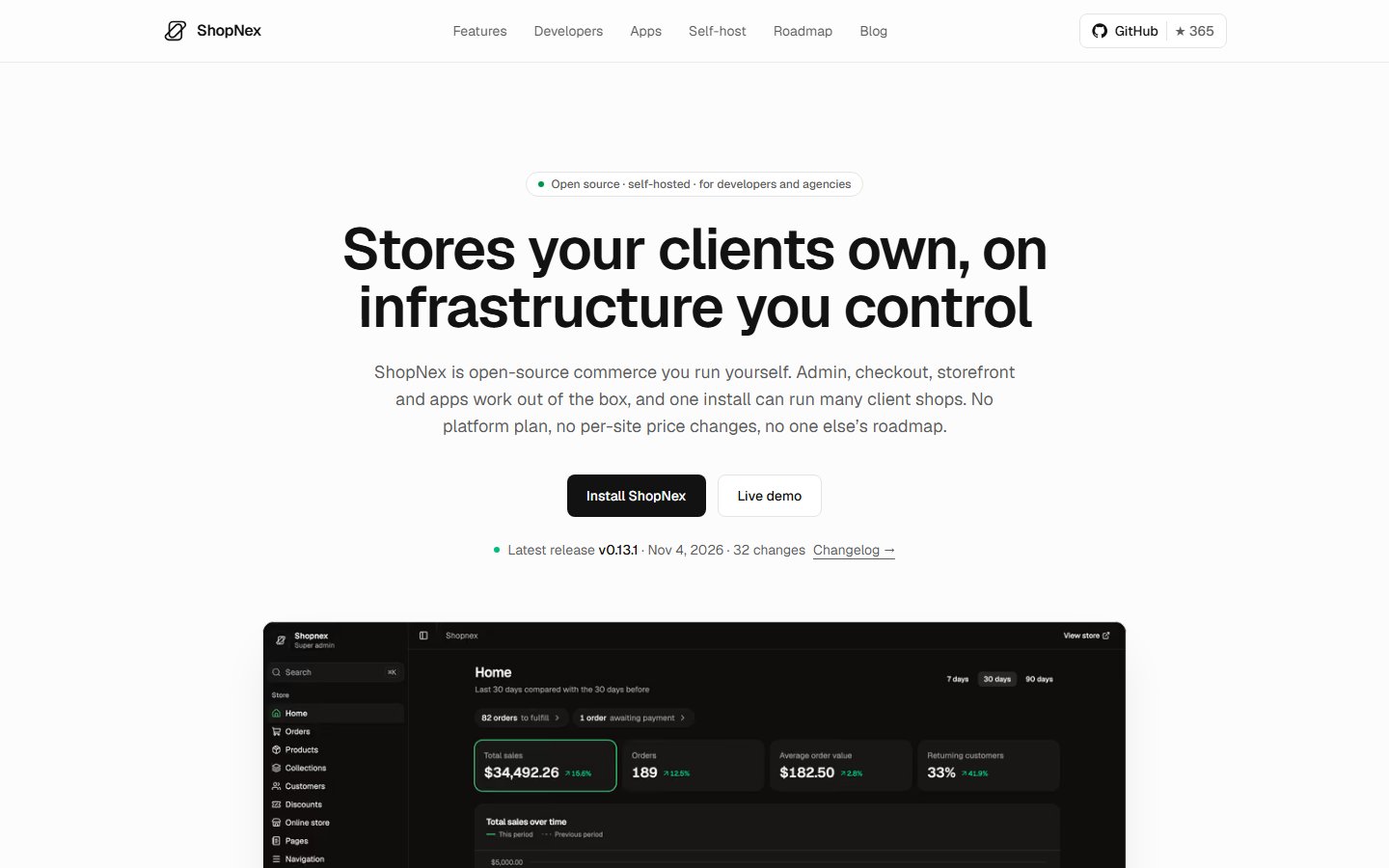
Self-hosted Shopify alternative. Run npx create-shopnex@latest, open the setup wizard, start selling.
Live demo · Self-hosting guide · Roadmap




Requires Node 22.22+. No Docker, no clone, no database to install.
npx create-shopnex@latest my-shop
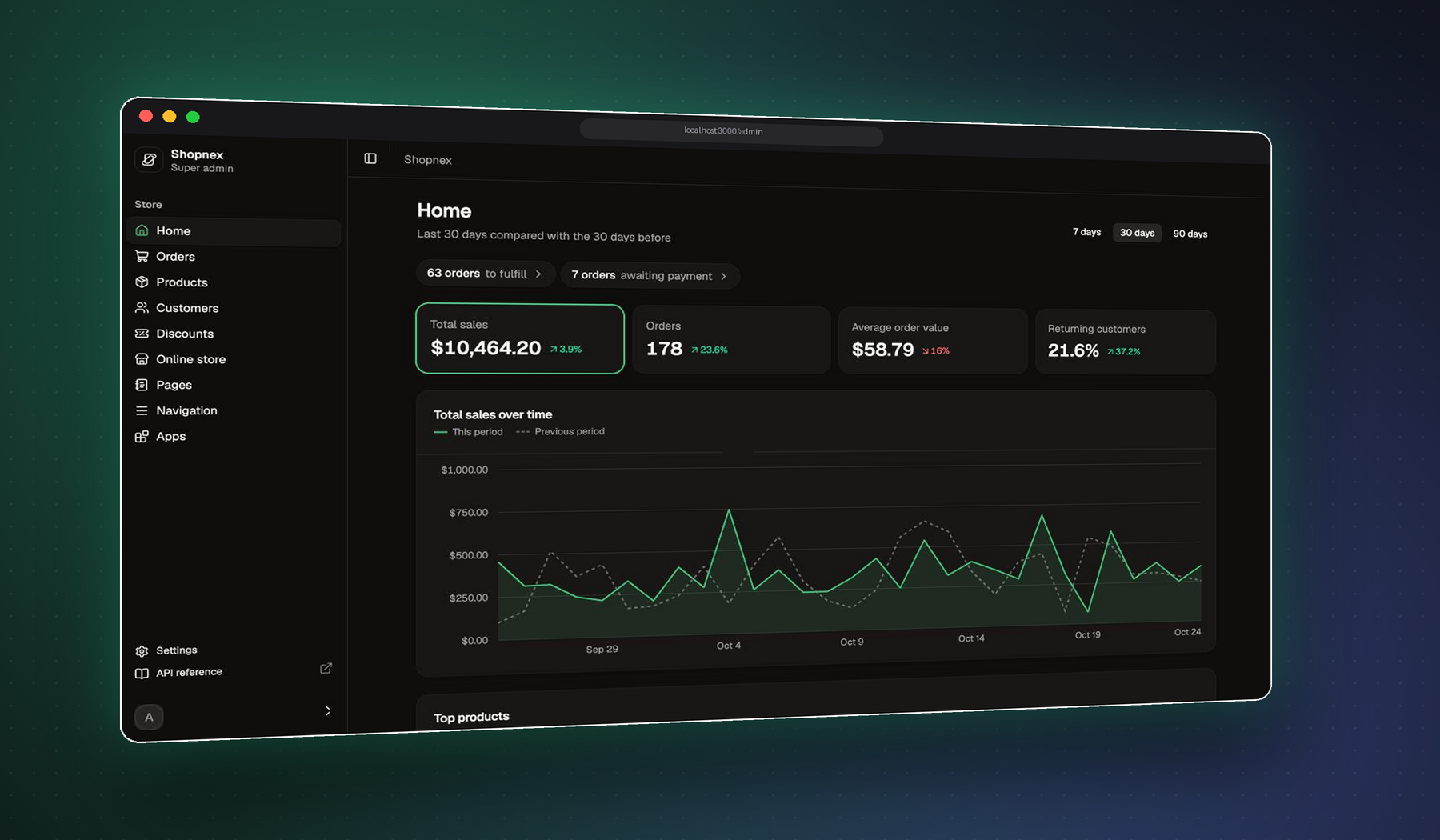
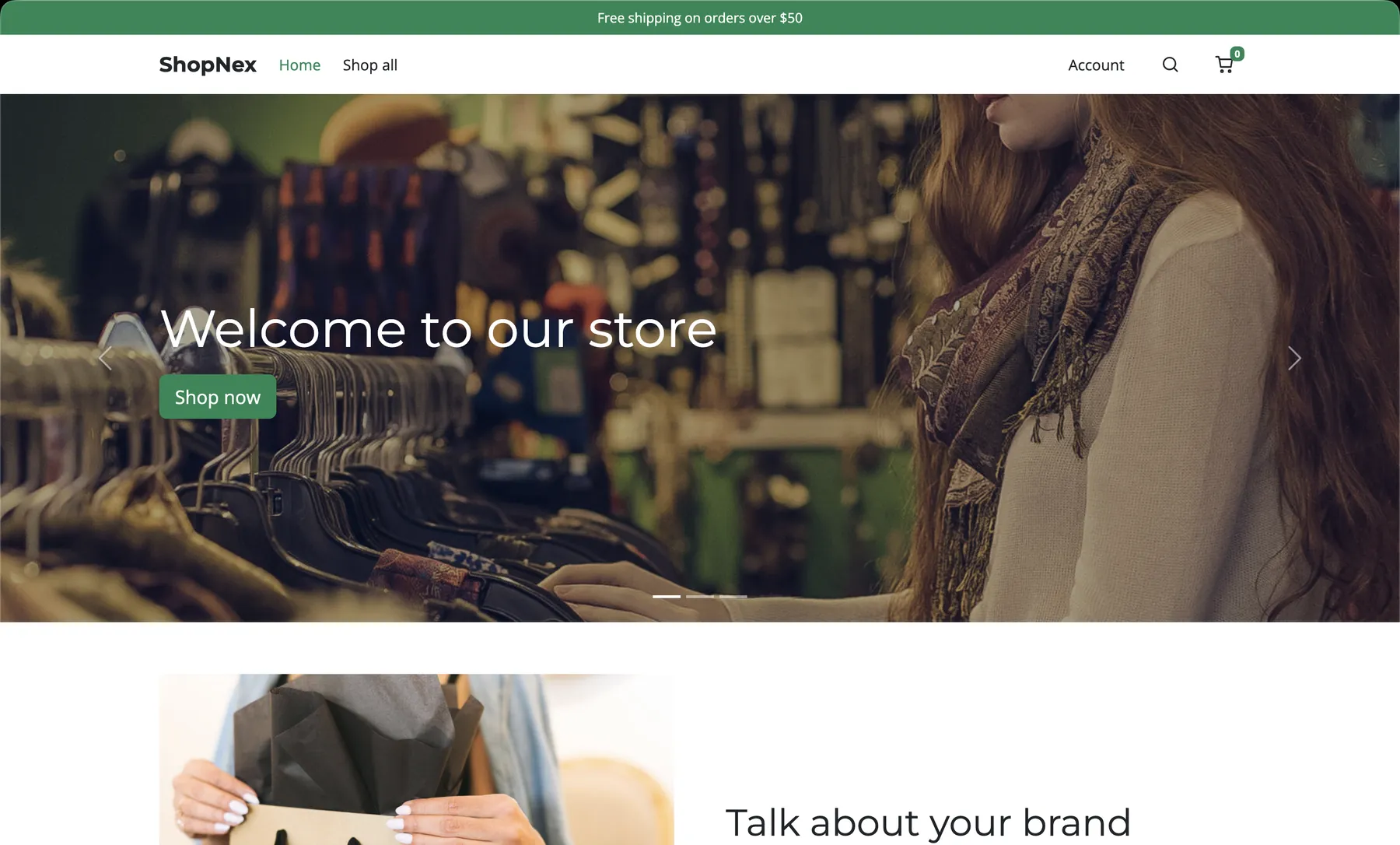
Open http://localhost:3000, follow the setup wizard, and your storefront is on http://localhost:4321.
--with stripe,cj,shippo.my-shop folder (.env, embedded database in .pglite/). Delete it to start over.DATABASE_URL to PostgreSQL or see the self-hosting guide.TENANCY_MODEShopNex is pre-1.0 and releases often. See the roadmap and releases.
I worked for two years at YUM Brands and learned how easy it is to build a system that's hard to manage, and how complex e-commerce can get. We integrated with systems like DoorDash, and without a clear contract it was hard to make changes without affecting the core.
In ShopNex I set a clear contract between the core and applications. Apps talk to it through an SDK and a bridge, with scoped API tokens and signed webhooks.
Requires Node (see .node-version), pnpm and PostgreSQL.
pnpm install
cp .env.example .env        # set the database URL and app secret
pnpm db:migrate
pnpm dev                    # admin on :3000, storefront on :4321
Guides live in apps/docs (pnpm dev:docs, http://localhost:3400). Developer reference is in docs/:
| Doc | Covers |
|---|---|
| Development | Env setup, pnpm dev options, local ports, OAuth sign-in, end-to-end tests |
| Architecture | Repository layout, API layout, admin routes, tenancy |
| Storefront API | Building an external storefront with @shopnex/storefront-sdk |
| Apps and marketplace | API tokens, building apps with @shopnex/app, embedded apps, marketplace |
| Webhooks | Topics, signatures, delivery and retries |
| Roadmap | What's done and what's next |
| Releasing | How to cut a release |
Chat with the team and other users on Discord, or post questions and ideas in GitHub Discussions.
Issues and pull requests are welcome: see CONTRIBUTING.md. Report security issues privately, as described in SECURITY.md.
See @shopnex/app for building apps with no database or OAuth code: authenticate,
Admin API, per-shop data, signed requests (@shopnex/app/store), and admin-styled UI (@shopnex/app/ui).