
domain-locker
🌐 The all-in-one tool, for keeping track of your domain name portfolio. Got domain names? Get Domain Locker!
Automatically checked · GitHub checked 2026-11-12
Overview
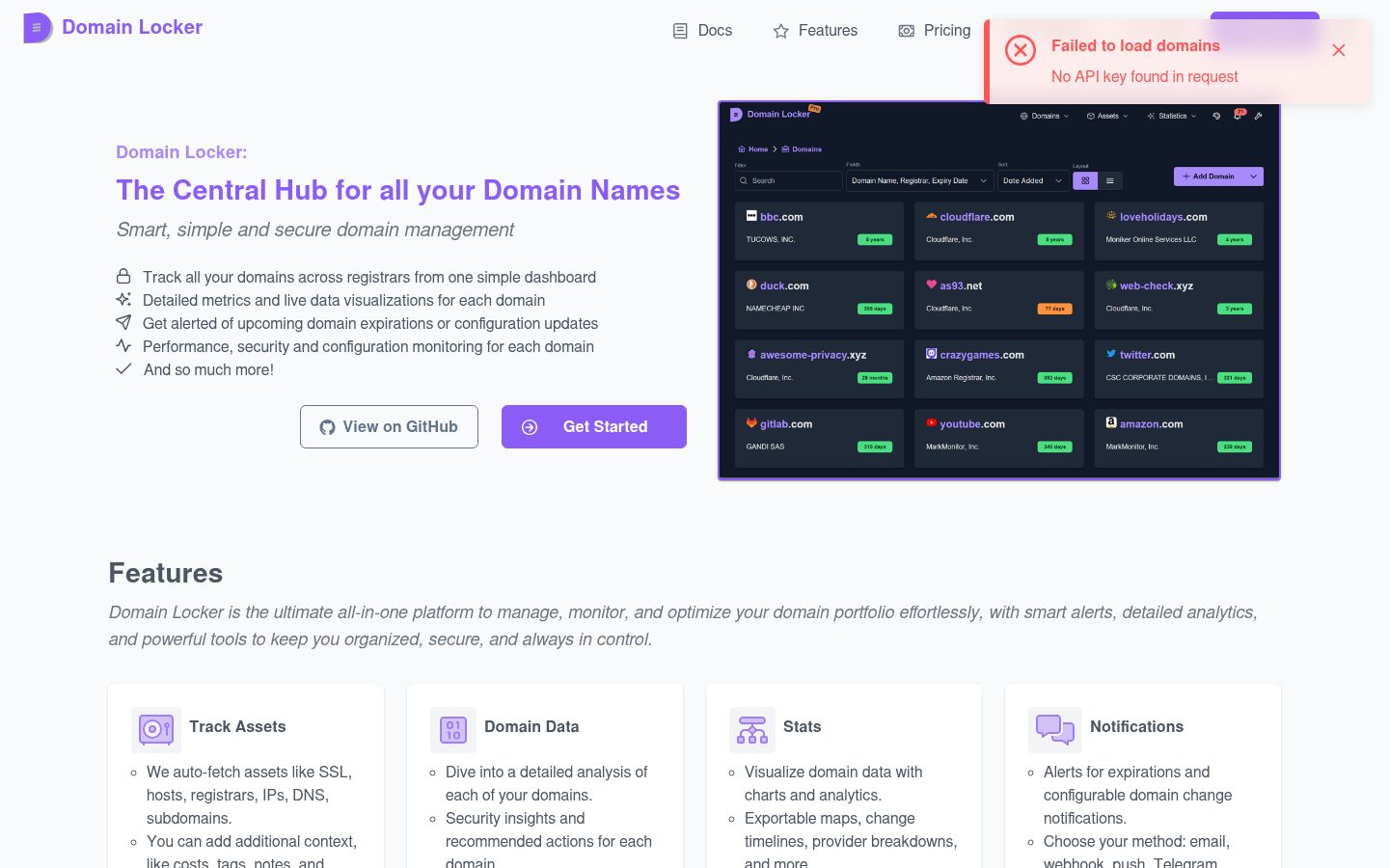
The aim of Domain Locker, is to give you complete visibility of your domain name portfolio, in once central place. For each domain you add, we analyse it and fetch all associated data. We then continuously monitor your domains, and notify you (according to your preferences) when something important changes or when it's soon to expire. So you'll get detailed domain analysis, security insights, change history, recent performance, valuation data and much more. With Domain Locker, you'll never again loose track of your domains, miss an expiration, or forget which registrar and providers each domain uses. More screenshots... (Sorry about the 5fps, I wanted to keep file size down!) - 👁️ Total visibility of all your domains and upcoming expirations - 📡 Auto-fetched data: SSL certs, hosts, registrars, IPs, subdomains, DNS, etc - 🔬 View detailed metrics and analysis for each domain - 📊 Visual analytics and breakdowns and trends across your portfolio - 💬 Configurable alerts and webhook notifications - 🗃️ Easy import/export, as well as API data access - 📜 Track changes in domain configuration over time - 📈 Monitor website health, security and performance - 💹 Keep record of purchase prices and renewal costs - 🔖 Add categories, and link related resources to domains - 🎨 Multi-language support, dark/light/custom themes To use Domain Locker, you have two options: 1. 💻 The managed instance, at domain-locker.com (free) 2. 🏗️ Or self-hosting yourself via Docker (also free, ofc!) Head to our website, and sign up with Google, GitHub or your email. The starter plan is free, and no setup is required. Just sign in, add your domains, and start tracking them. - Prerequisites: - Domain Locker is intended to be run in a container, so you'll need Docker installed on your host system. - Containers: - We have a Docker image published to lissy93/domain-locker. - That's all you need. Data is stored in a SQLite file, or in Postgres if you'd rather run one. - Example: - Putting it all together, you can use our docker-compose.yml file. - For more details, view the Self-Hosting Docs